• Skip to primary navigation
  • Skip to main content

CannaBiscuit Flour Power Hour

Good for the head is good enough for us!

  • What It Is?
  • Preamble, Flower Punk
    • Frank Zappa interview
  • Episode 1: Bob Dylan
    • Dave Van Ronk, remembered
  • Episode 2: Valerie June
  • Episode 3: Alice B. Toklas
  • Episode 4: John Lee Hooker
  • Episode 5: Van Morrison
  • Episode 6: Santana
  • Episode 7: Janis Joplin

abiscuit

Episode 7: Janis Joplin

Janis Joplin's high school yearbook photo

Janis Joplin's high school yearbook photo
Janis Joplin’s high school yearbook photo
The ‘Sixties was when we, in the States, hit our peak as an organic cultural entity, and any record of it must include Janis Joplin. I kick myself in the shin every Wednesday to remind myself to perform a random act of kindness before the week is out in gratitude for attending not one but two Janis Joplin concerts.

And not any two, but the one on a bill with The Paul Butterfield Blues Band (avec Elvin Bishop and David Sanborn) and then the one in Harvard Stadium, which was her last. There has been truckloads of ink used in argument over whether Ms. Joplin was impeded by Big Brother and the Holding Co., but enhanced by the Full Tilt Boogie Band, or vice versa. That misses the point – all that mattered was that the band didn’t ruin it and neither of those outfits did.

in the audience with Mama Cass

It took a great lady just to get from Texas to San Francisco, where she became the great broad with the great voice that did us all so much good. There are plenty of clips of Janis Joplin available to stream; this one is especially good because the wonderful Mama Cass Elliott is watching along with us and we see her reaction at the end of the song.
Episode 6: Santana

Up the road from where John Lee Hooker found bewilderment in the scholarly approach to the blues, is Tanglewood, a veritable Valhalla for the classical music set, and the occasional locale of bodice-ripping rock ‘n roll.

During the Great Pivot,* the Boston Symphony lured the legendary Bill Graham away from the City to produce summertime concerts in the country, and although Graham is revered for his bi-coastal Fillmores, he put on a couple Tanglewood shows that merit the attention of anyone who cares to know what it was like before the men with green eye shades took over.

my missed opportunity

During 1969, after dropping out of college in the spring, then flunking the draft physical in June, I was all set for Woodstock, until the offer of a trip to San Francisco fell in my lap. Since it makes more sense to consume music a couple bands at a time, not all at once, it was not with a heavy heart that I unloaded my 3-day pass to the Aquarian Exposition, and hied to the Left coast.

Besides scoring a job in Yosemite National Park, I also got turned on to Santana, a local band with a boss new album. When I was back east for Christmas, I couldn’t wait to turn on my friends to my awesome discovery! Duh!!!!!!! was everybody’s response, we saw them at Woodstock.

* The Great Pivot, for all intents and purposes, is the Nixon presidency – before was the Sixties, after is something dark and sinister.

Episode 5: Van Morrison

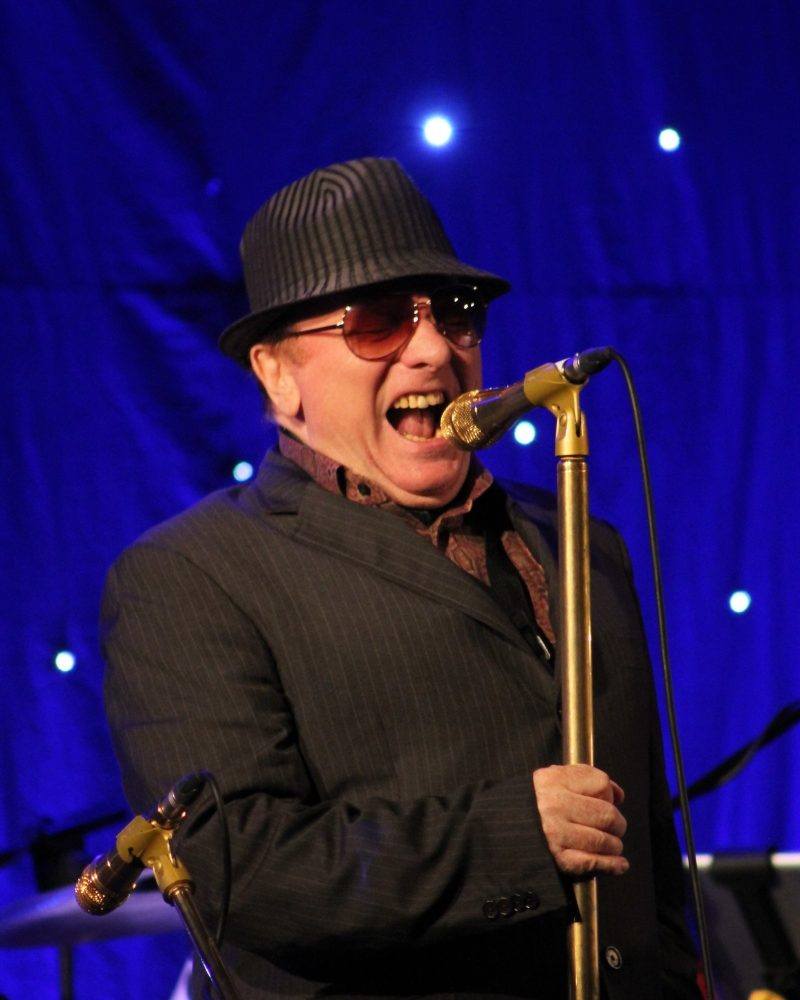
Van Morrison belts it out

Getting sent to boarding school smack in the middle of the 1960s pissed me off, at first. When your world stretches a dozen neighborhood blocks in any direction, by the time you’re a high school senior, the gang you’ve been hangin’ with since grade three operates like a well-oiled machine. The status quo looks mighty fine, thank you.

Van Morrison belts it out
Van, No. Ireland, 2015; photo: ArtSiegel, CC BY-SA 4.0, via Wikimedia Commons

But, a year from graduation, I’m yanked from my comfort zone and sent as far north as you can get in the lower 48, to a school run by monks with deep roots in French France and shallow ones in French Canada.

The first friend I make there is a music nut from Montreal, which is six or seven light years closer to what’s happening than my formerly beloved hometown. He turns me on to a British band called Them. I dig Them right off the bat. Who is/are Them? Glad you asked, because they’re really The Angry Young Them, and none other than Van the Man is at the helm, snarling, sneering, and singing the daylights out of every lyric in sight – including his own G-L-O-R-I-A, and John Lee Hooker’s Don’t Look Back!

Episode 3: Alice B. Toklas

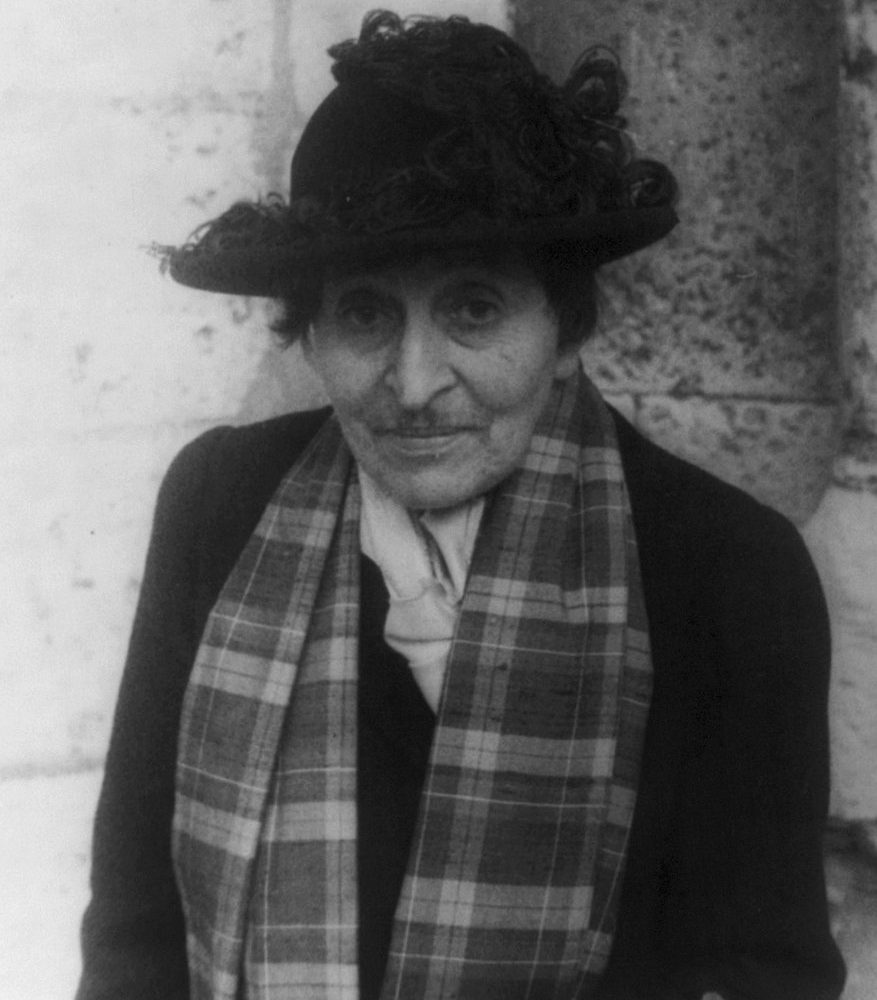
Alice B. Toklas, by Carl Van Vechten

Alice B. Toklas, by Carl Van Vechten
We can attribute the whole edible craze to a refugee from the 1906 San Francisco earthquake, Alice B. Toklas, who fled her native city for Paris six months later and wound up there in the warm, welcoming embrace of another refugee, Gertrude Stein. Together, they invented the Twentieth Century, leisure class version!

The Alice B. Toklas Cook Book, published in 1954, seven years after Stein’s death, although full of recipes, is really an autobiography, but since Ms. Stein had already published the Autobiography of Alice B. Toklas in 1933, Ms. Toklas called it a cook book!

Brion Gysin’s recipe for Haschich Fudge

(which anyone can whip up on a rainy day)

This is the food of Paradise – of Baudelaire’s Artificial Paradises: it might provide an entertaining refreshment for a Ladies Bridge Club, or a chapter meeting of the DAR. In Morocco, it is thought to be good for warding off the common cold in damp winter weather, and is, indeed, more effective if taken with large quantities of hot mint tea. Euphoria and brilliant storms of laughter; ecstatic reveries and extensions of one’s personality on several simultaneous planes are to be complacently expected. Almost anything Saint Theresa did, you can do better if you can bear to be ravished by ‘un evanouissement reveille.’”

Take 1 teaspoon black peppercorns, 1 whole nutmeg, 4 average sticks of cinnamon, 1 teaspoon coriander. These should all be pulverised in a mortar. About a handful each of stoned dates, dried figs, shelled almonds and peanuts: chop these and mix them together. A bunch of cannabis sativa can be pulverised. This along with the spices should be dusted over the mixed fruit and nuts, kneaded together. About a cup of sugar dissolved in a big pat of butter. Rolled into a cake and cut into pieces or made into balls about the size of a walnut, it should be eaten with care. Two pieces are quite sufficient.

Obtaining the cannabis may present certain difficulties, but the variety known as cannabis sativa grows as a common weed, often unrecognized, everywhere in Europe, Asia and parts of Africa; besides being cultivated as a crop for the manufacture of rope. In the Americas, while often discouraged, its cousin, called cannabis indica, has been observed even in city window boxes. It should be picked and dried as soon as it has gone to seed and while the plant is still green.

Bonus content

The laborious and painstaking research required by this project is rewarded from time to time by the unlikeliest nuggets of wisdom found, such as this passage from the chapter called Servants in France:

“Helene was without humor and was always practical. When the Titanic sank, she said she thought the Anglo-Saxon gallantry of saving women and children first was unintelligent and unnatural. She believed families should be saved first, then single people.”

I suppose that each side of proposition will always have champions, but I like the emphasis it gives the family, which I believe is the best idea in human history. History must be on my side, too, because it travels through families, not people.

Episode 2: Valerie June, The Moon And Stars

Just so you don’t think we’re lost in some ’60s nightmare, this episode is about someone in the full bloom of her career, before it has become a commonplace, not that there’s anything wrong with commonplace, which she is not. I got turned-on to her a couple years ago and was enraptured – and impressed, entertained, inspired, etc.

One of our C.I.s* tipped us to her latest project, The Moon And Stars: Prescriptions For Dreamers which turns out to be about as proper a use of forty-four minutes screen time as imaginable:

I’m gonna skeedaddle now before anything crazy happens, like taking a stab at describing the musical performance of Ms. Valerie June with this tired old language I’ve been dragging around with me since before I left home many many moons ago! Later….

*C.I. = Culture Interpreter, usually someone who speaks network tv and/or social media, and shares the highlights.

Dave Van Ronk, remembered

Dave Van Ronk

Dave Van Ronk
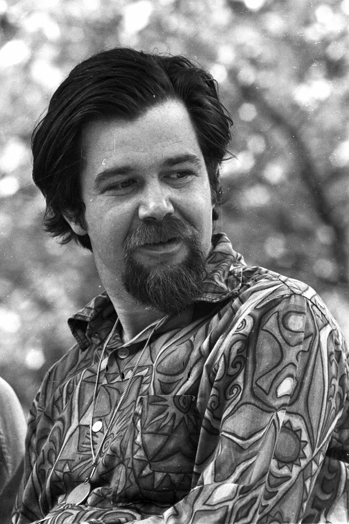
Dave Van Ronk, 1968 Philadelphia Folk Festival.
Inside Llewyn Davis, the 2013 Coen Brothers movie based on Dave Van Ronk’s memoir The Mayor of MacDougal Street, inspired me to tell the story of a few encounters with Van Ronk over the course of almost 25 years. We met at the Rusty Nail Saloon, Sunderland, MA twice in the mid and late 1970s and then did an interview before a concert at the Eighth Step Coffeehouse in Albany, NY in 1999.

I had been turned on to Van Ronk my first week at college in 1967, when an upperclassman told me that I looked like him. I hadn’t heard of Van Ronk, so I borrowed his copy of Gambler’s Blues, and loved it right off the bat. Before long I added Gambler’s Blues and Dave Van Ronk Sings the Blues to my record collection, which already held 5 or 6 Bob Dylan LPs. [Photo: Jack Mancini, via Wikimedia Commons]

I wasn’t aware of the relationship between Dylan and Van Ronk until I read Bob Dylan: An Intimate Biography, by Anthony Scaduto several years later. In it, Scaduto reports that Dylan recorded Van Ronk’s version of House of the Risin’ Sun without asking permission. Even to a Dylan freak, that seemed pretty rude. In the fall of 1975, both of them made appearances in my neck of the woods – Van Ronk played a mid-week show at the Rusty Nail Saloon in Suderland, MA and Dylan’s Rolling Thunder Revue played back-to-back shows in Springfield.

Beside Dave Van Ronk at the Rusty Nail Saloon

The latter was announced about one week in advance and the rumors were that Dylan’s musical cronies were showing up and playing. Van Ronk’s concert was a couple days before and so when I arrived and saw him sitting alone at the bar, I was excited to say hello and ask if he’d be appearing with Dylan later that week.

He had a glass of whiskey in front of him and was holding his guitar in his lap, slowly moving his palm along it, as if he were warming it up. I said hello, told him I was a big fan, and asked about the Dylan shows. His reply, made in a polite and not unfriendly manner, was that he didn’t want to talk about Dylan. Oops, I thought, and left Van Ronk alone with his pre-concert routine.

I thoroughly enjoyed the show, surprised that he was so entertaining, with a dimension of personality that I hadn’t noticed listening to the records. But I couldn’t help myself later, seeing him getting ready to leave the club; after saying great show, nice to meet you, I asked him to verify Scaduto’s House of the Risin’ Sun report. Dave stopped in his tracks, stared into the vacuum of my eyes, and said, “I told you I do not want to discuss that man.”

Besides feeling like an idiot, and not a litle rude myself, that was all the verification I needed. I attended both Rolling Thunder Revue shows in Springfirld, but didn’t get a chance to run the story by Dylan. They both discuss the episode in the clip below:

Meeting Dave Van Ronk again

The second meeting occurred 3 or 4 years later, by which time I had made the acquaintance of young woman who became an ardent fan, even though she bore no resemblance to Dave Van Ronk, none whatsoever. Since she also was a guitar player, her esteem may have been more genuine than mine, a mere doppelganger. We got to the club early and saw Van Ronk by himself at the far end of the bar, just the same as before. Instead of approaching with a head full of ideas, this time I was content to introduce my friend to Dave, and tell him that she was a guitar player too. He seemed genuinely charmed and within a few minutes, the three of us were sharing a booth close to the stage.

My recollection of the ensuing three hours is a little fuzzy, except that it was about as much fun as you could have, newfound friends, talking and laughing over round after round of whiskey. He did 3 or 4 sets and eventually the show had the feel of a conversataion between him and her. He ended with a charming dedication to her, but I cannot recall if it was Teddy Bear’s Picnic or Chicken is Nice?

During the 1980s, I saw him again at various clubs in the Hudson Valley and the Berkshires. Those shows were before full houses and neither the opportunity nor the inclination to approach Van Ronk presented itself again. He did seem to be aging poorly, though.

Dave Van Ronk concert and interview

By the late 1990s, I’m writing a music column in a local newspaper and running a website, which credentials were enough to get me into a concert that he would be giving at the Eighth Step Coffeehouse in Albany, NY. We did a telephone interview from his Greenwich Village apartment the day before.

Dave Van Ronk listening to Garth Hudson in Albany, NYI brought a tape recorder and a camera to the concert, but didn’t get much use out of either. The camera jammed up so I only got a couple eerie double exposures, and I left the tape recorder alone because I didn’t want to be intrusive. Instead, I scribbled notes furiously in the dim light as Dave gave a brilliant 2+ hour concert, which could’ve doubled as a lecture on the history of music in America. And Garth Hudson was in the house, to do a few songs by himself and to accompany Dave on accordian on a few others.

Dave was hale and hearty, appearing way better than he had in the 80s. It’s none of my business, but maybe he’d quit drinking? That was the last time I saw Dave Van Ronk. The sadness of his untimely death in 2002, however, is assuaged by several factors:

  1. He was at the top of his game late in life;
  2. He’d received a Lifetime Achievement Award from the American Society of Composers, Authors and Publishers (ASCAP);
  3. He got props from Dylan in Chronicles, Vol. 1;

Also of consolation is the fact that his posthumous CD, “Dave Van Ronk…and the tin pan bended and the story ended,” seems like a replica of the concert he gave at the Eighth Step Coffeehouse. Here’s hoping that Inside LLewyn Davis turns out to be deserving of it’s association with the story of Dave Van Ronk, whose influence extends far beyond the tenure and jurisdiction of the Mayor of MacDougal Street.

Dave Van Ronk @ Amazon.com

Next Page »
  • What It Is?
  • Preamble, Flower Punk
  • Episode 1: Bob Dylan
  • Episode 2: Valerie June
  • Episode 3: Alice B. Toklas
  • Episode 4: John Lee Hooker
  • Episode 5: Van Morrison
  • Episode 6: Santana
  • Episode 7: Janis Joplin

© 2026 Dave Read Contact us